WASH

DSC04347

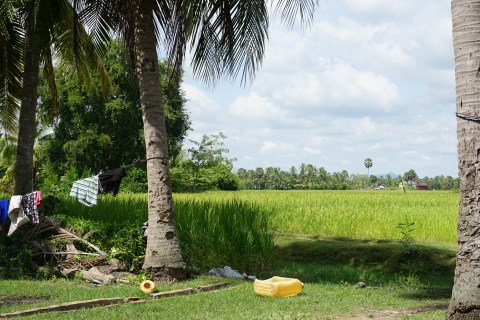
She stands at the sink overlooking the rice fields as the panicle, packed with grain sweep in a cooler morning breeze. The sun starts to colour the sky.

It had been a long night for her.

Her youngest had twisted in pain, his arms wrapped across his stomach, his eyes as big as saucers brimming with tears begged her to make it stop. Yet another night of little sleep for the family as his cries perforated the night in between short moments of fitful sleep.

The number of sleepless nights were becoming too many. Her family could not survive much longer. Her husband could not continue to work long hours in the field with little sleep.

She spied the pamphlet on the floor. It was stained with mud that had been carried into the house on little feet as they had darted outside in the rain to go to the toilet. She hoped they went a distance from the house, but she could hardly reprimand given the amount of rain that fell last night. She will check that later.

For now, she just needed to recharge.

And think.

As her tea brews she can hear the thump of coconuts falling outside. Husband is picking a few for her to take into the market. She wipes the pamphlet and slowly turns it over in her hands, looking with envy at the picture of a woman standing outside a freshly finished brick building. She recalls what the man from SAMIC told them.

“We can offer you a loan to build an outside toilet and install a water filter to give you clean water as well. It would cost you about $30-50 US dollars a month to repay. It will be a declining loan. The money is offered under the WASH program, to help provide water and sanitation. You could be the first in your village.”

Could they earn enough from the sale of the coconuts and rice to repay this and keep the family? She could take the buggy and find rubbish to sell if they needed more money. Her eldest was nearly old enough to help too.

Her breath stops suddenly as she contemplates her children getting sicker. Too many in the district had died already from stomach complaints. They say it’s the bad water and no toilets that is doing it. They had no money for hospitals, yet it seemed only a matter of time before one of her brood fell too sick to recover.
DSC04345

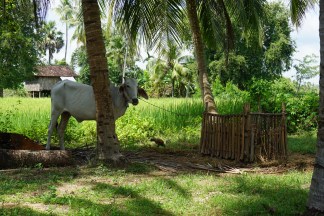
There is yelling from below as the chickens scatter. The cow is off its chain again. She puts her dreaming aside and heads downstairs to save the animals from her husband. The lack of sleep is showing itself already. Its going to be a long day. Not the day to try to talk about a new toilet.


6 weeks later:

It is so shiny! The water so clean you can see the bottom of the tub. There was even enough money to install a path so there will be no mud being tramped across the rugs inside.

She is now running late to market as the neighbours called in to view this new building, quiz  husband on the cost. Some even wanted to give it try, it has created quite an interest. The people from SAMIC have become quite busy now.

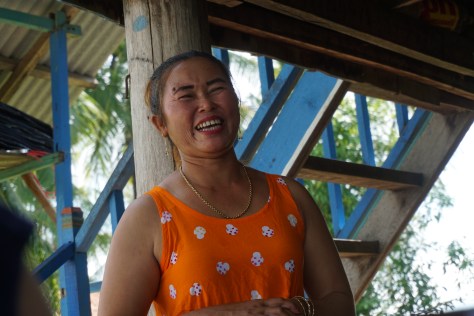
Her smile is one of relief. Her children are better, she sleeps at night. They all have renewed energy to face each day.

A small building can make a big difference to a family in Cambodia.DSC04329
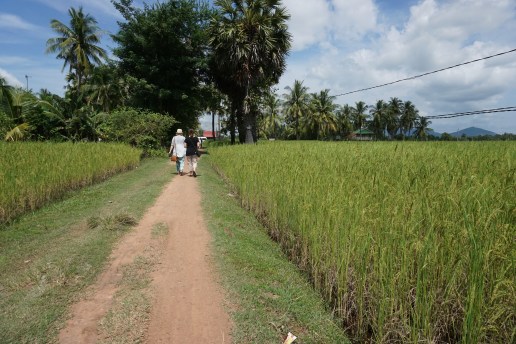
She climbs on the bike beside her husband. Today she is making her first repayment at the SAMIC office. As her children run ahead on the path, with energy levels tripled she knows she has made the right decision.

Maybe she will ask her husband if she can learn to read soon. A better world awaits her and the children, with a little help. She nods at the Spirits as the bike weaves to market, her smile beaming in the midday sun.DSC04353
 

**Inspired by experiences while travelling in Cambodia with Good Return and Xplore.  If you wish to know more, especially the WASH program also see SAMIC.

All photos are my own

First Steps

countryhorizons_cambodia_nightcityskylinewithsunset

It took me some time to decide. I wanted to push myself out of my comfort zone every now and then but not sure this was for me. I had visions of being thrown in a foreign jail, not able to tell family and friends where I was. But maybe I just watched way too many movies.

The country had been a war zone in my lifetime. I have small recollections of learning about the events of the 1970s at school, even raising money to help the poor of the region.

But I said OK, lets do this!

YOLO …   (and I can feel my daughter rolling her eyes…50 year olds should not use YOLO she would be saying)

Off I go – to gain the fourth passport stamp of my life.

As the waters of Singapore came into view from the airplane window I contemplated the Australian bloodshed that had occurred decades before as World War 2 knocked on our door and annihilated the land now beneath me.

As a teenager I was fascinated by the World Wars. I watched countless TV series about prisoners in Changi Prisoner of War camp, of women who were captured by the Japanese in 1942 and of course Pearl Harbour and Gallipoli.

As the plane makes it final flight into the modern Singapore I’m taken back to a school assignment interview with a friend of my father who has been a prisoner in Changi and survived. He didn’t tell me much at the time and at 14 I was a little naïve to ask for the detail. As none of my family have a history of service in the wars, these were my only experiences of the bloody battles that ravaged southern Asia last century.

The city beneath me and modern airport, complete with indoor gardens was a stark contrast to what my imagination conjured of Singapore. I celebrated my first footsteps in Asia with a Singapore Sling – it seemed fitting and absolutely glorious after the eight-hour flight.

And then onto our destination, Cambodia.

My senses exploded as we exited the airport at Phomn Penh.

Lights from a herd of motorbikes galloped towards us, another line jostled beside trying to sneak past. The air was filled with a peal of horn blasts swirling in with the dust of the evening skyline.

The streets were a coalescent of old with new. A stooped woman slowly wipes the street dirt from a table covered in a plastic faded cloth, beckoning diners to take a seat while next door an elderly man sat on a broken chair minding bric-a-brac that covers every available corner of the shop in the hope a shopper sees a bargain or a necessity.

Youngsters kick an empty drink bottle dispersing other litter and discarded food across the street. A toddler wearing only baggy torn shorts watches, his face a flummox of his day with specks of food, tears and mucus staining his cheeks and running down his bare chest.

A car tries to reverse from an American clothing store, the security guard holding up traffic to allow the driver to enter the continual flow. A troupe of tuk tuks hang near a club, ready to barter for a ride in the hope of making a meagre wage from Saturday night tourists to finish early and maybe rest tomorrow.

Overhead I spy 3 storey buildings inclining on each other, seemingly built as an afterthought for family expansion. Spirit houses protect the occupants, the ornate gold coating catching the last of the sunlight, the fruit offerings keeping the spirits peaceful.

The streets are framed by a spaghetti of electrical wires looping around leaning poles and mixing with neon lights and dilapidated signage, a mix of local chirography and western advertising.

Our driver paints the political and social landscape for us as we bump and thrust through the city traffic. The herd continues to stream by, some laden with 3 or 4 passengers, even a baby slumped asleep over the handle bars. Others tow a small trailer packed with goods from vegetables, building materials to sorted rubbish. We learn there is a market for the rubbish – one person’s trash another’s treasure that can put food on the family table.

We hear the story of our driver’s family, a story we will hear retold by many we meet. The loss of family members in the 1970s, a country pillaged and ravaged through history, a people exploited with their spirit tattered yet unbroken.

Unfinished highways funded by other countries loom in the twilight, while displaced sleep in hovels in its shadows. Our car bounces along unloved roads and past the contrasting grandeur of others.

The grit of this city is smattering on us, our eyes seeing what our minds are not comprehending.

Our ears are hearing the chaos of existence yet our hearts will listen to the silence of oppression.

We steel ourselves for the days ahead. We step into the night, into the city.